Overbite, Underbite and Crossbite: What Are the Treatment Options?

Bite problems can affect more than the appearance of your smile. They may also make chewing uncomfortable, cause uneven tooth wear, and affect how your upper and lower teeth fit together. Overbite, underbite, and crossbite are three common bite problems that orthodontic treatment can help correct.

The right treatment depends on the type and severity of the bite problem, the patient's age, tooth alignment, and jaw development. Options may include braces, clear aligners, orthodontic appliances, or, in some cases, jaw surgery.

Understanding the differences between these bite problems can help you determine when to seek an orthodontic evaluation and which treatment options may be appropriate.

What Is an Overbite?

An overbite occurs when the upper front teeth overlap the lower front teeth vertically. A small amount of overlap is normal, but a deep overbite can cause the upper teeth to cover too much of the lower teeth.

A deep overbite may contribute to tooth wear, gum irritation, or discomfort in some cases. It can also affect the balance and appearance of your smile.

Overbite Treatment Options

1. Traditional Braces

Braces gradually move teeth into better positions using brackets and wires. They can help correct a deep overbite by improving tooth alignment and the way the upper and lower teeth fit together.

2. Clear Aligners

Clear aligners are removable trays designed to move teeth gradually. Depending on the severity of the overbite and the complexity of the tooth movements required, aligners may be an option for overbite correction.

3. Orthodontic Appliances

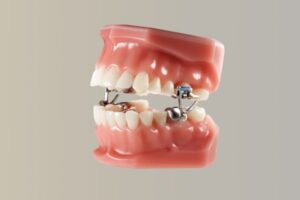
Certain orthodontic appliances can help guide tooth movement or influence jaw development in growing patients. An orthodontist may recommend these appliances when additional support is needed to improve the bite.

4. Combined Orthodontic Treatment

More complex overbites may require a combination of braces or aligners and other orthodontic appliances. In severe cases involving significant jaw discrepancies, corrective jaw surgery may be considered after a specialist evaluation.

The best overbite treatment depends on whether the problem is primarily related to tooth position, jaw alignment, or a combination of both.

What Is an Underbite?

An underbite occurs when the lower front teeth extend in front of the upper front teeth when the mouth is closed. This bite problem may develop because of the position of the teeth, differences in jaw growth, or a combination of these factors.

An underbite can make biting and chewing difficult. Depending on its severity, it may also affect speech, facial balance, and tooth wear.

Underbite Treatment Options

1. Braces

Braces can help correct underbites caused by tooth misalignment and can be part of a broader treatment plan for more complex bite problems. They move teeth into positions that improve their alignment and function.

2. Clear Aligners

Clear aligners may help correct certain mild to moderate underbites when the required tooth movements are suitable for aligner treatment. However, aligners cannot independently correct every underlying jaw discrepancy.

3. Growth Modification Appliances

For children and adolescents whose jaws are still developing, an orthodontist may recommend specific appliances to help guide jaw growth in suitable cases. Early assessment can help identify whether growth-related treatment may be beneficial.

4. Orthodontics Combined With Jaw Surgery

A severe underbite caused by a significant difference in jaw size or position may require a combination of orthodontic treatment and corrective jaw surgery. Surgery is generally considered when the skeletal discrepancy cannot be adequately corrected with tooth movement alone.

Early orthodontic evaluation is particularly useful for children with an underbite because the treatment approach may differ depending on their stage of growth.

What Is a Crossbite?

A crossbite occurs when one or more upper teeth sit inside the corresponding lower teeth rather than outside them when the mouth is closed. It can affect the front teeth, back teeth, or both.

Crossbites may develop because of tooth positioning, a narrow upper jaw, or differences in how the upper and lower jaws fit together. If left untreated, some crossbites may contribute to uneven tooth wear, gum recession, or a functional shift of the jaw.

Crossbite Treatment Options

1. Braces

Braces can move affected teeth into a more appropriate position and improve how the upper and lower teeth meet. They are commonly used for crossbite correction when controlled tooth movement is needed.

2. Clear Aligners

Clear aligners may correct selected crossbites, depending on the teeth involved and the severity of the problem. An orthodontist can determine whether aligners can achieve the required movement safely and effectively.

3. Palatal Expanders

A palatal expander may be recommended when a crossbite is associated with a narrow upper jaw. This appliance gradually widens the upper jaw and is often used in growing children, although treatment options depend on skeletal maturity and individual needs.

4. Early Orthodontic Treatment

Treating certain crossbites during childhood can help improve bite function and reduce the risk of some developing problems. An orthodontist can assess whether early intervention is appropriate or whether monitoring until a later stage is preferable.

The most suitable crossbite treatment depends on whether the issue involves individual teeth, the width of the jaw, or both.

How Does an Orthodontist Choose the Right Bite Correction Treatment?

Choosing the right orthodontic treatment involves more than identifying whether a patient has an overbite, underbite, or crossbite. An orthodontist evaluates several factors before recommending treatment.

These may include:

  • Severity of the bite problem:
  • Mild tooth misalignment may require a different approach from a significant jaw discrepancy.

  • Age and jaw development:
  • Growing patients may benefit from certain growth-guidance appliances that are not appropriate for adults.

  • Tooth alignment:
  • Crowding, spacing, and the position of individual teeth can influence treatment choices.

  • Jaw position:
  • Some bite problems are caused primarily by tooth position, while others involve the relationship between the upper and lower jaws.

  • Treatment goals:
  • The plan should address bite function, oral health, and the appearance of the smile.

Depending on these findings, an orthodontist may recommend braces, clear aligners, specialized appliances, or a combination of treatments. Some patients may also need additional specialist care.

When Should You See an Orthodontist for a Bite Problem?

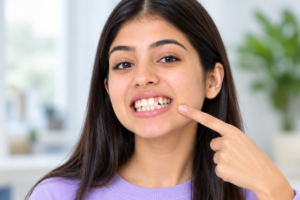
Consider scheduling an orthodontic evaluation if you notice that your upper and lower teeth do not meet comfortably, your front teeth overlap excessively, your lower teeth extend in front of your upper teeth, or your upper teeth bite inside your lower teeth.

Other reasons to seek an assessment include difficulty biting or chewing, uneven tooth wear, or a noticeable shift in your jaw when closing your mouth.

Children should also receive an orthodontic evaluation if a bite problem becomes noticeable during tooth development. Early assessment does not always mean treatment must begin immediately; it helps determine the right timing.

Overbite, Underbite, and Crossbite Treatment in Ballwin, MO

If you or your child has a bite problem, a professional orthodontic evaluation can help identify its cause and the available treatment options.

At Plaza Orthodontics in Ballwin, Missouri, patients can receive an individualized assessment to determine whether braces, Invisalign clear aligners, or other orthodontic approaches may be suitable for their needs.

Whether you are looking for overbite treatment, underbite correction, or crossbite treatment in Ballwin, MO, the first step is understanding how your teeth and jaws fit together. A personalized treatment plan can help improve bite alignment, support oral health, and create a more comfortable smile.

Ready to discuss your bite concerns? Contact Plaza Orthodontics to schedule a consultation and learn about treatment options for you or your child.

Frequently Asked Questions

1. Can braces fix an overbite, underbite, and crossbite?

Braces can correct many bite problems by moving teeth into better positions. However, the outcome depends on the severity and underlying cause of the problem. Significant jaw discrepancies may require additional appliances or, in some cases, corrective jaw surgery.

2. Is clear aligner treatment effective for bite problems?

Clear aligners can correct certain overbites, underbites, and crossbites when the required tooth movements are suitable for aligner treatment. More complex cases may require braces or additional orthodontic appliances. An orthodontist can determine which option is appropriate.

3. Is it better to correct a bite problem during childhood?

Some bite problems are easier to address while a child is still growing, particularly when jaw development is involved. However, many bite problems can also be treated in teenagers and adults. An orthodontic evaluation helps determine the most appropriate timing.

4. How long does bite correction treatment take?

Treatment time varies according to the type and severity of the bite problem, the treatment method, and the patient's response to treatment. Some cases take several months, while more complex cases may require a few years. Your orthodontist can provide an estimated timeline after evaluating your teeth and jaws.

5. When should I see an orthodontist for bite correction in Ballwin, MO?

Consider seeing an orthodontist if you notice excessive tooth overlap, lower teeth extending in front of upper teeth, upper teeth biting inside lower teeth, or difficulty biting comfortably. Plaza Orthodontics in Ballwin, MO, can evaluate your bite and discuss appropriate treatment options.
Improve your bite. Support your smile. Schedule an orthodontic consultation with Plaza Orthodontics to learn which treatment options may be right for you.